_TAG_2026.webp?width=1500&height=215&name=PSYMPL_LOGO_(R)_TAG_2026.webp "PSYMPL_LOGO_(R)_TAG_2026")















Table of contents

.svg)
Banks searching for companies like Personetics usually aren't unhappy with the idea of AI-driven customer insight. They're evaluating whether Personetics or other companies are the best version of it. Personetics built its name on transforming raw transaction data into real-time financial insight, and over 150 million banking customers across 35 markets now use it every month. That scale earned its category leadership, but it didn't end the category.
A growing list of competitors now competes on the same territory: transaction enrichment, AI-powered insight, customer engagement, and money management. Some go head-to-head with Personetics feature for feature. Others solve a narrower problem extremely well, like deposit growth or conversational banking, and pair with Personetics rather than replace it.
This article breaks down nine platforms worth knowing, where Personetics still leads, where it doesn't, and what to actually look for before signing a multi-year contract with any of them.
Top Personetics Alternatives at a Glance: The 60-Second Comparison
Before diving into each platform individually, it helps to see how they stack up side by side. The table below sorts each competitor by its relationship to Personetics, along with one honest pro and one honest con for each.
|
Platform |
Relationship to Personetics |
Pro |
Con |
|
Personetics |
N/A |
Largest scale in the category: 150M+ monthly users across hundreds of banks in 30+ markets [1] |
Heavier, more enterprise-oriented platform that may be overkill for smaller institutions |
|
Direct competitor |
Strong categorization accuracy plus a fully localized, customizable category tree out of the box |
Less emphasis on SME/business banking compared to retail-focused features |
|
|
Direct competitor |
Deep persona tagging (750+ categories) turns spending behavior into specific next-best-action triggers |
Smaller company footprint with fewer large-bank deployments to point to |
|
|
Direct competitor |
Fastest-moving AI roadmap in the category, with a new Agentic AI Suite and proven engagement lifts at named banks |
Newer AI features mean less long-term track record than its 13-year-old core engine |
|
|
Direct competitor |
Two decades of experience covering both retail PFM and SME/business financial management |
Less visible recent AI news compared to faster-moving competitors |
|
|
Complementary tool |
Strong embedded-finance and credit-tools angle for digital brands and fintechs, not just banks |
Not a direct substitute for Personetics' core transaction enrichment and insights capabilities |
|
|
Direct competitor |
No-code, drag-and-drop builder lets non-technical teams launch experiences fast |
Customization depends on its library of 100+ pre-built features rather than deep custom logic |
|
|
Complementary tool |
Purpose-built conversational AI gives banks a true chat assistant, not just a static insights feed |
Doesn't replace transaction enrichment or categorization; needs to be paired with another tool |
|
|
Complementary tool |
Singular focus on core deposit growth, ranked as a top Personetics alternative by CB Insights |
Narrower scope means it won't cover broader PFM or engagement needs on its own |
|
|
Complementary Tool |
Adds psychographic data on top of any platform above or CRM, turning motivation insights into persuasive, individualized messaging |
Not a transaction enrichment or PFM engine on its own, works best layered onto one of the platforms above, not instead of one |
Footnote: [1] Personetics serves 150M+ monthly banking customers across 35 global markets and more than 130 financial institutions, per its October 2024 press release (PR Newswire).
6 Gaps Every Bank Should Know Before Evaluating Personetics and Its Alternatives

Personetics earned its scale by solving real problems for large institutions, and that scale is a legitimate selling point. But scale and fit aren't the same thing, and several recurring gaps show up when banks evaluate Personetics against the broader market.
- 1. Enterprise Pricing Built for Large Institutions, Not Necessarily Smaller and Community Banks
Personetics has historically focused its sales motion on large regional and national banks, the kind with dedicated digital transformation budgets. According to BusinessWire, smaller financial institutions and credit unions rely on core platform embeds (like Fiserv Experience Digital) to access Personetics' capabilities rather than direct, standalone enterprise implementations.
- 2. Insights Apply to Behavior Patterns, Not Individual Motivation
Personetics analyzes what customers do with their money: spending categories, recurring bills, savings patterns. That's valuable, but two customers with identical transaction histories can have completely different reasons for their financial choices, and behavior-pattern analysis alone won't surface that distinction.
- 3. Implementation Timelines That Favor Big IT Teams
Deploying an enterprise platform like Personetics typically means integrating with core banking systems, data warehouses, and existing CRM tools. Institutions without a dedicated IT and data team often find this stage takes longer than they budgeted for.
- 4. Limited Conversational AI Compared to Purpose-Built Chat Platforms
Personetics Assist adds a conversational layer, but banks requiring open-ended customer dialogue (where customers initiate questions rather than respond to nudges) typically find purpose-built platforms like Kasisto offer deeper capability in that specific function.
- 5. A Platform Designed Around Engagement Metrics, Not Persuasion
Personetics measures success in clicks, approvals, and engagement rates on its insights. That's a useful proxy, but it doesn't tell a bank why one customer responds to a savings nudge and another ignores it, which is a different question than whether they responded at all.
- 6. Insight Delivery Doesn't Scale Down to Smaller Institutions
The same enterprise-grade infrastructure that supports 150 million monthly users can be more platform than a credit union with 40,000 members actually needs, both in cost and in operational complexity.
What Real Customer Insight Looks Like: A Buyer's Checklist for Online Banking Platforms
Every vendor in this category claims to deliver "AI-powered insight," but that phrase means different things depending on who's selling it. Use this checklist to separate genuine capability from marketing language before you sign anything.
- 1. Does It Explain the "Why," Not Just the "What"?
A platform that only reports spending categories tells you what happened. The more useful question is why a customer is spending, saving, or holding back, since that's what actually predicts what they'll do next.
- 2. Can It Segment Beyond Age, Income, and Account Balance?
Demographic segmentation groups customers who may have nothing in common beyond a birth year or balance range. Look for platforms that can segment by values, risk tolerance, or financial goals, too.
- 3. Does It Personalize Messaging, Not Just Categorize Spending?
Clean transaction categories are table stakes at this point. The differentiator is whether the platform can translate that data into messaging that actually resonates with each customer's mindset.
- 4. How Fast Can Your Team Launch a New Insight Without IT?
Some platforms require an engineering ticket for every new insight or campaign. Others let marketing and product teams configure new use cases directly, which matters enormously for speed to market.
- 5. Does It Scale From Community Bank to Global Institution?
A platform built exclusively for top-40 banks may be overkill, in cost and complexity, for a regional bank or credit union. Ask vendors directly how their pricing and implementation change at smaller scale.
- 6. Can It Integrate With Your Existing CRM and Data Stack?
Insight is only useful if it reaches the right channel at the right time. Confirm any platform integrates cleanly with the CRM, core banking system, and marketing automation tools you already run.
- 7. Does It Support Compliance Review Before Insights Go Live?
Financial institutions operate under real regulatory scrutiny, and generated insights or messaging need a review layer before they reach customers. Ask how each vendor handles compliance checkpoints in its workflow.
- 8. Is the Vendor Investing in AI and Innovation, or Resting on Legacy Tech?
Some platforms built strong categorization engines years ago and haven't meaningfully updated their AI since. Look at recent product announcements, not just the original pitch, to gauge ongoing investment.
8 Personetics Alternatives, Explained 1 By 1
The checklist above outlines what to look for in a personalization platform. The eight platforms below show how each one actually stacks up against it, starting with the alternative closest to Personetics' own approach to transaction enrichment.
Inside Meniga's Approach to Transaction Data Enrichment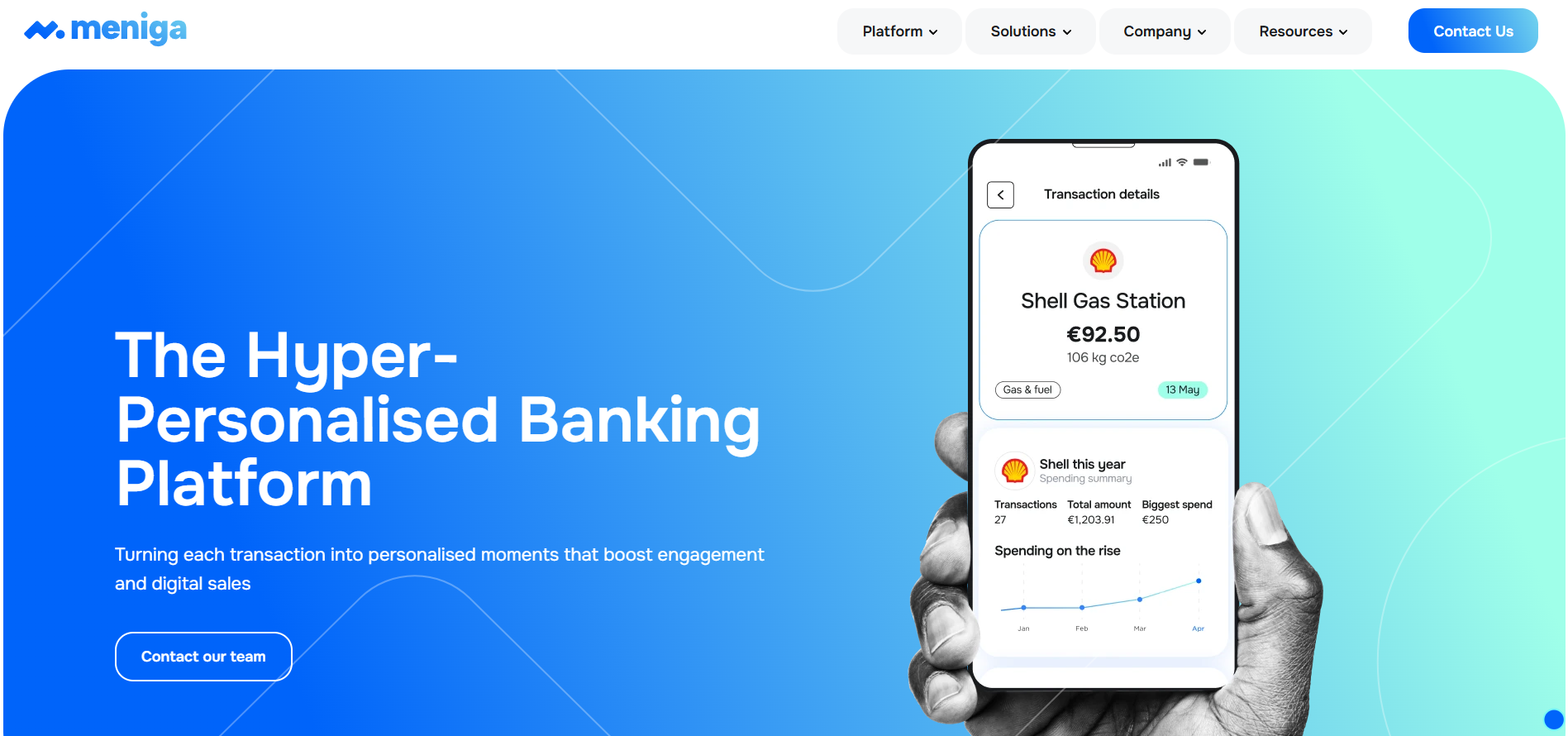
Meniga serves over 100 million banking customers across 30 countries, built on a categorization engine that consolidates and enriches transaction data with merchant logos, subscription tagging, and location detail. The platform pairs that enrichment with micro-segmented insights and a cashflow forecasting tool, making it a strong fit for retail banks modernizing legacy systems, though it leans less into small business use cases than some competitors here.
FinGoal: Turning Raw Transaction Data Into Financial Institutions' Best Asset
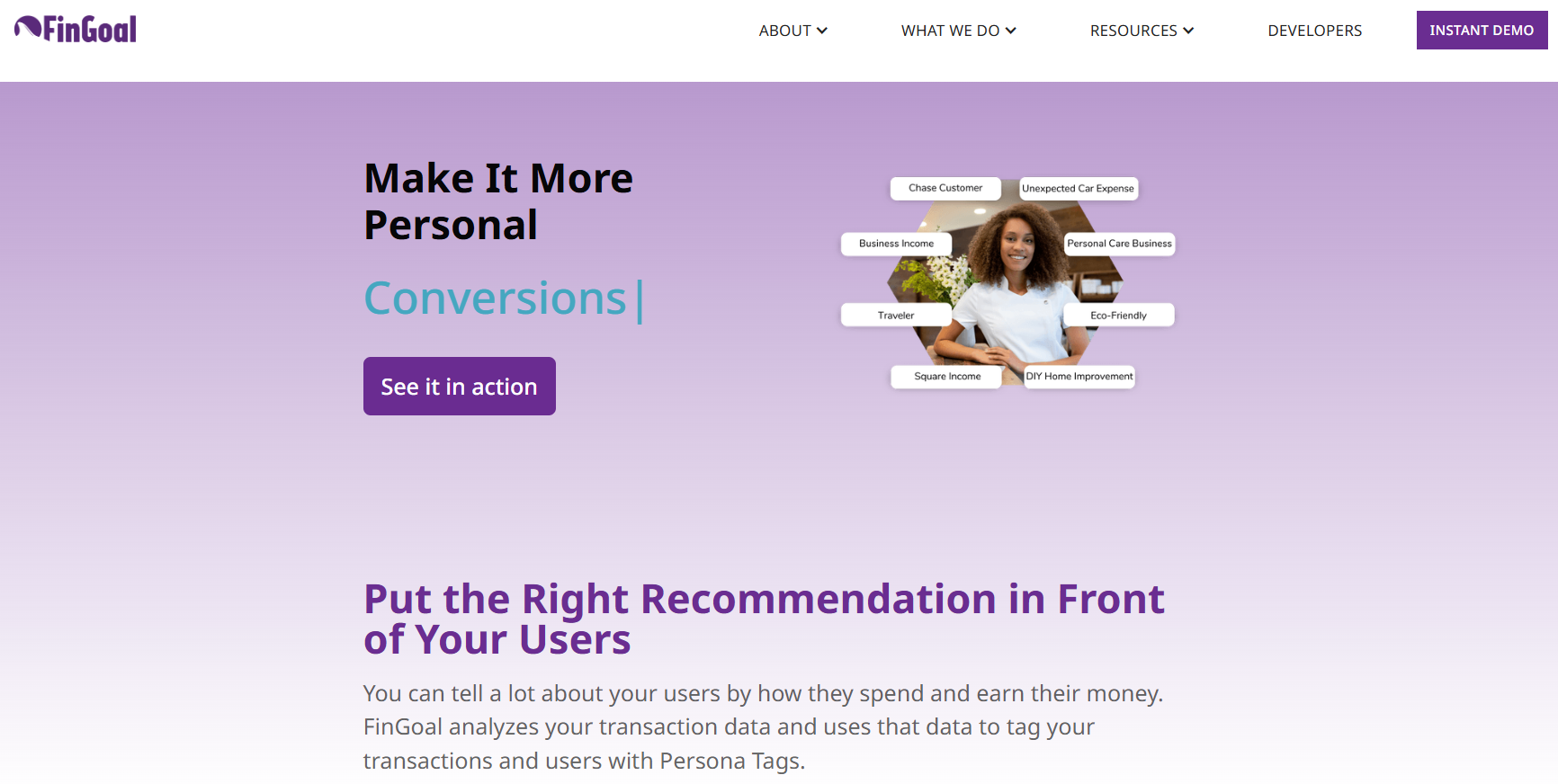
FinGoal specializes narrowly in transaction enrichment and persona tagging, offering over 750 spending categories to surface life events and financial patterns. That data feeds a "next best action" engine for individualized recommendations, though FinGoal's smaller footprint means fewer marquee bank deployments than larger competitors on this list.
Moneythor's AI-Powered Playbook for "Deep Banking"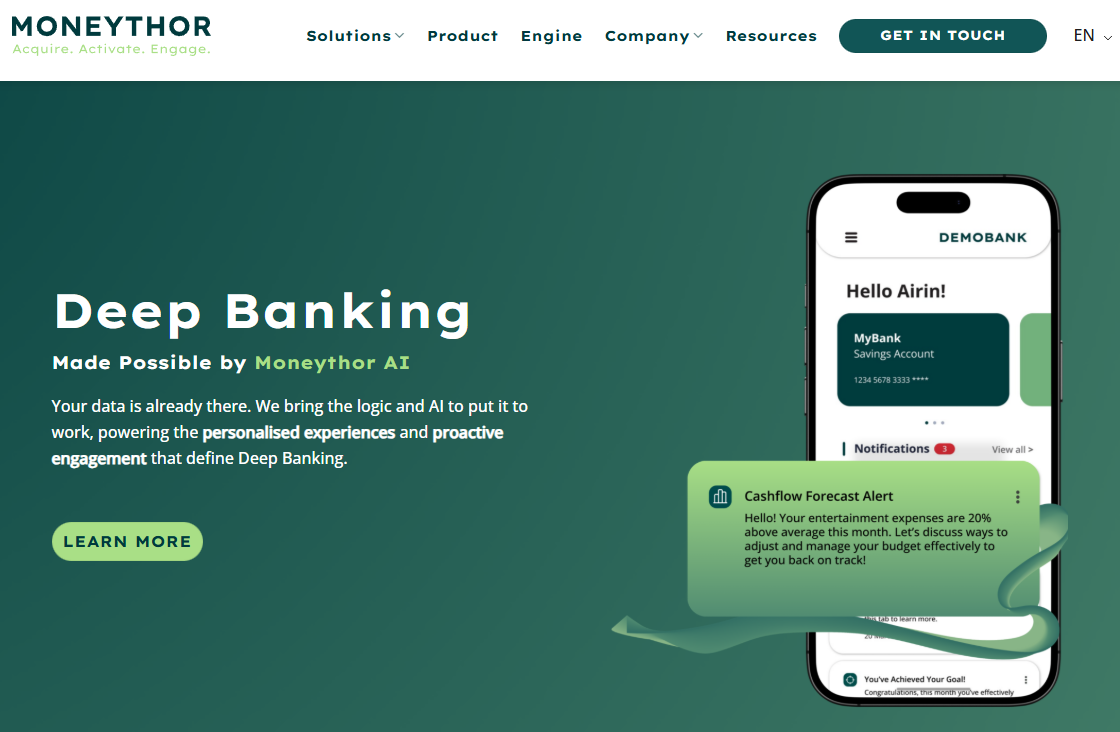
Moneythor built its newest edge around an Agentic AI Suite, launched in 2025, that adapts personalized content in real time using large language models. The company calls this approach "Deep Banking," and clients including Standard Chartered have reported engagement rates on personalized insights, well above those of typical of generic banking alerts.
Strands: The Fintech Veteran for Retail & SME Financial Management
Founded in 2004, Strands brings nearly two decades of experience to both retail PFM and SME financial management, a combination few competitors offer directly. Its product line spans transaction enrichment, personalized insights, and cash flow forecasting for small business customers, though it hasn't generated the same recent AI headlines as faster-moving rivals.
How Array Connects Credit Data Across Digital Brands & Banks
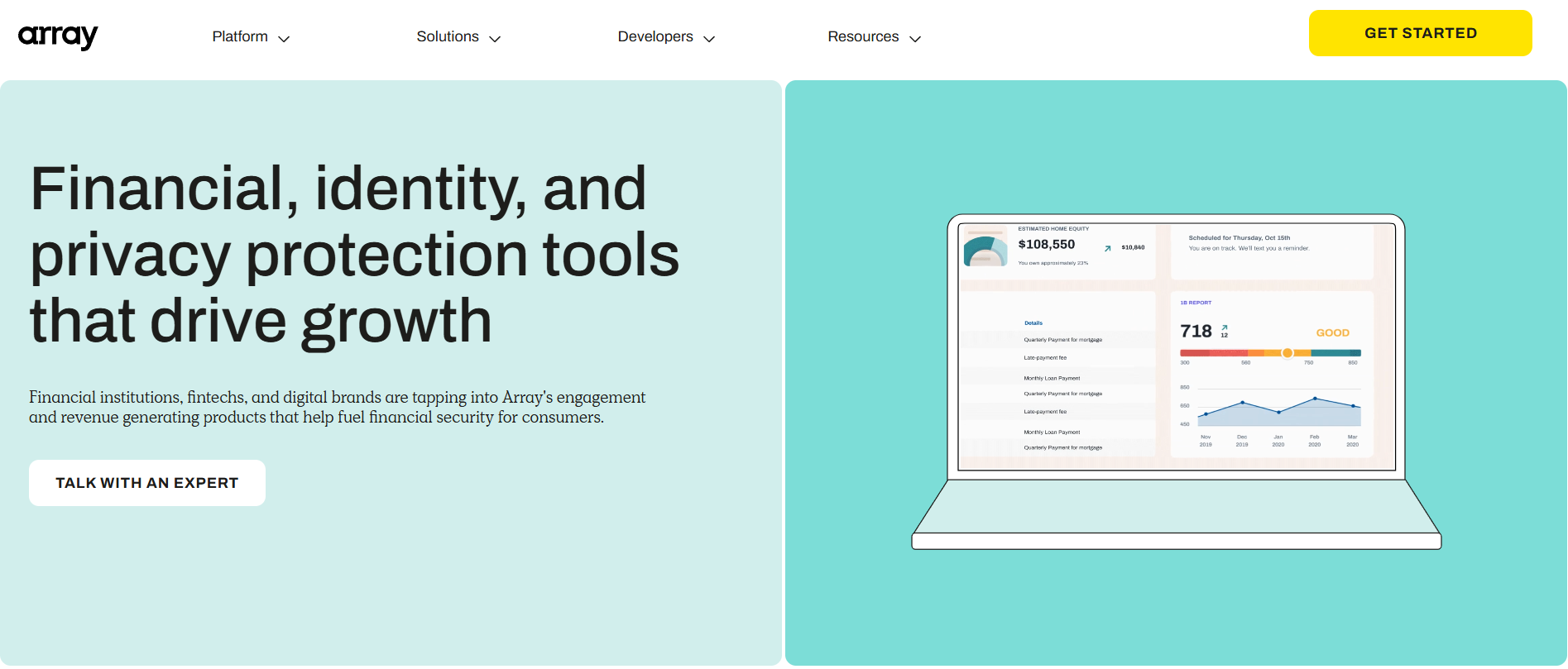
Array takes a different angle than most platforms here, focusing on embedded credit tools rather than transaction enrichment or PFM insights. Its My Credit Manager and Offers Engine help banks and digital brands deliver personalized credit recommendations, making Array a fit for credit-focused use cases rather than a direct Personetics substitute.
Dimply's Drag-and-Drop Solution to Financial Engagement
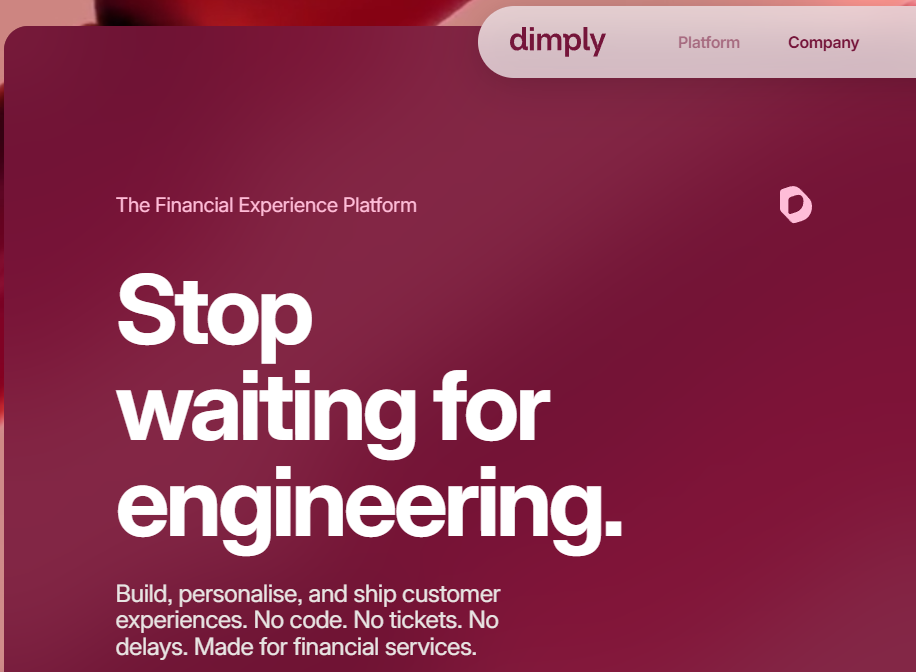
Dimply's no-code flow builder, with over 100 pre-built features like insights, quizzes, and gamified content, lets product teams launch experiences without engineering support. That speed comes at the cost of deeper customization, since changes happen within Dimply's existing feature library rather than fully custom logic.
Kasisto: How It Compares to Personetics on Conversational AI
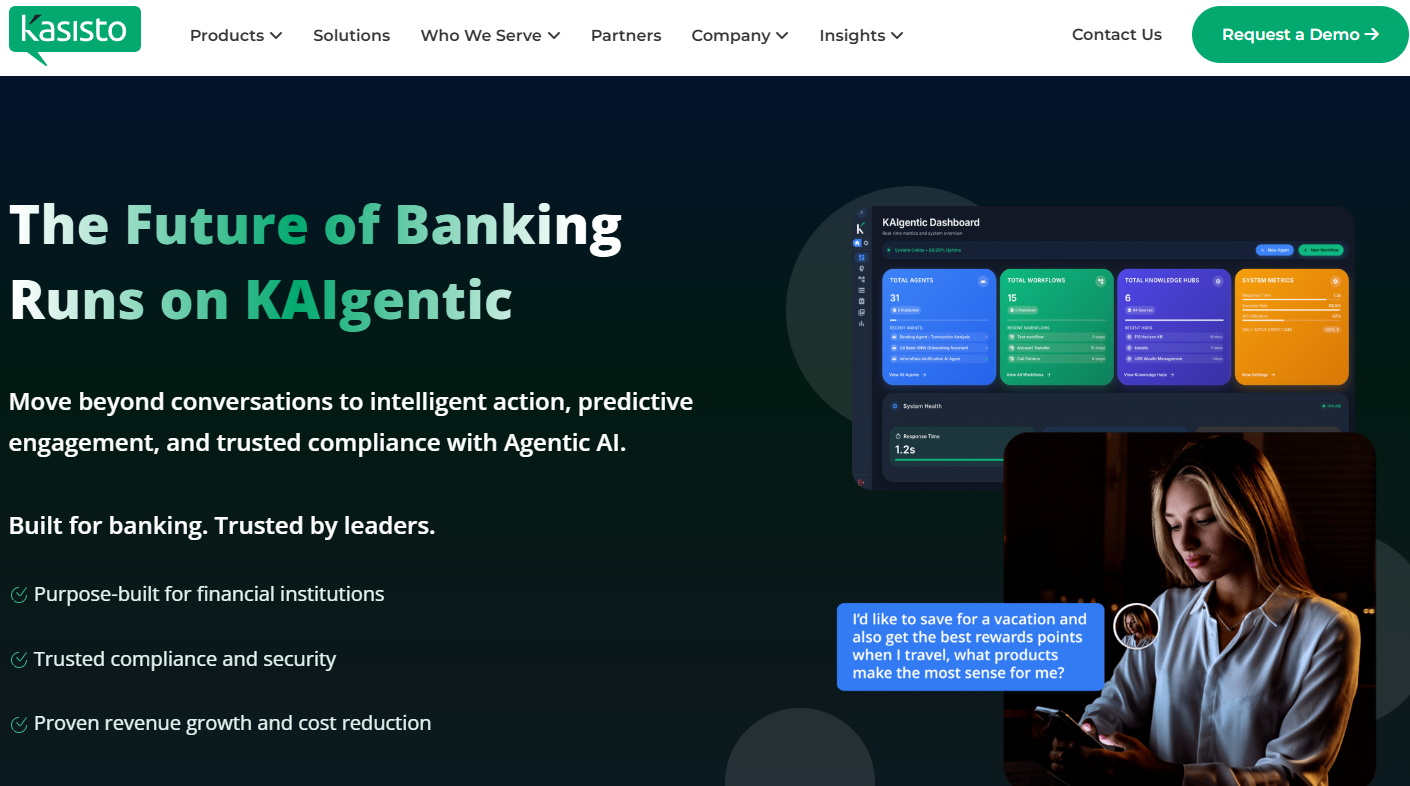
Kasisto focuses on purpose-built conversational AI, letting customers ask open-ended questions and get contextual answers, an area Personetics doesn't prioritize. The two are often evaluated together rather than against each other, since many banks pair Kasisto's chat layer with Personetics' insight engine instead of choosing one over the other.
Spiral's Singular Focus: Deposit Growth Through Personalized Banking
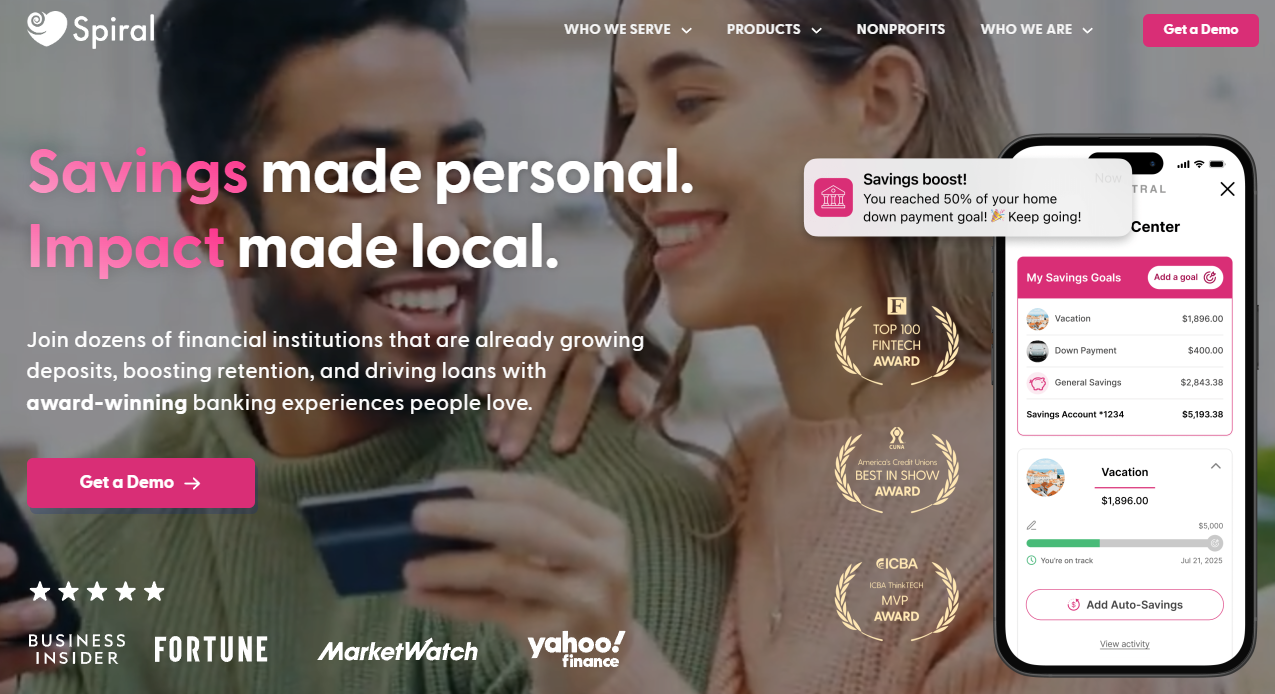
Spiral keeps its scope narrow, focused entirely on deposit growth through personalized banking experiences, and CB Insights ranks it as a top Personetics alternative in that specific category. That narrow focus makes Spiral a strong fit for banks prioritizing deposit retention above broader PFM or engagement needs.
5 Ways Psympl's Psychographic AI™ Can Enhance Whatever Platform You Choose
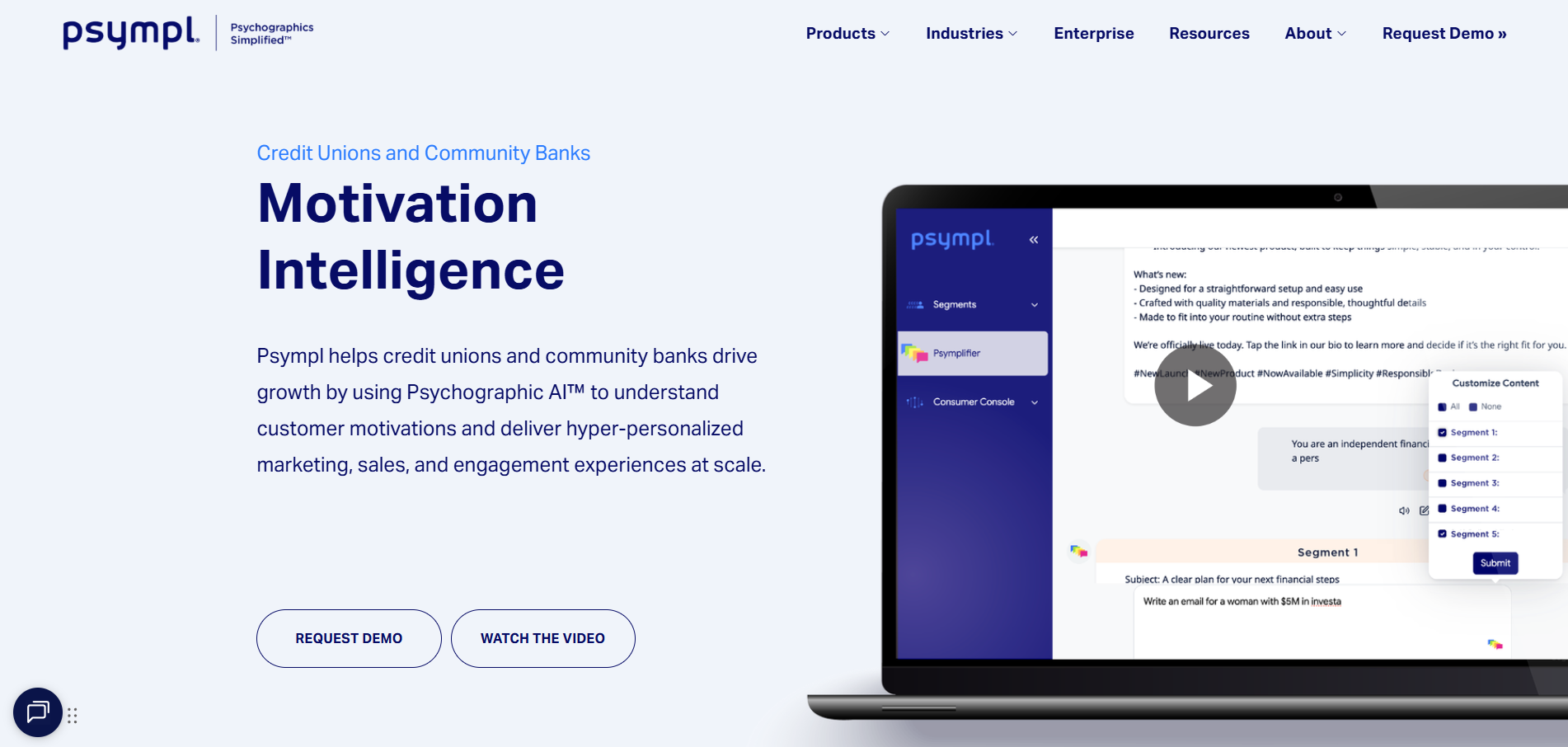
None of the nine platforms above are mutually exclusive with Psympl®, and that's intentional. Psympl® doesn't compete with transaction enrichment or PFM engines, it adds a layer most of them are missing entirely: understanding the motivation behind customer behavior, not just the behavior itself.
- 1. Layering Motivation Intelligence on Top of Transaction Data
Whatever platform handles your transaction categorization, Psympl's Psychographic AI™ adds a layer that explains why a customer is saving cautiously or spending aggressively. That context turns a clean data feed into something genuinely actionable.
- 2. Turning Generic Insights Into Persuasive, Individualized Messaging
Most platforms on this list generate insights based on what happened in an account. Psympl® takes those same insights and tailors the actual language, tone, and framing to match what will resonate with that specific customer's values and mindset.
- 3. Segmenting Customers by Values and Risk Tolerance, Not Just Behavior
Two customers can have identical transaction histories and completely different financial personalities. Psympl® segments by psychographic traits like risk tolerance and core values, capturing distinctions that behavioral data alone can't. - 4. Compliant Copy Generation for Every Customer Touchpoint
Generating personalized messaging at scale only works if it clears compliance review. Psympl's Psymplifier™ generates copy built for regulated financial services from the outset, reducing the back-and-forth that custom messaging usually requires. Moreover, Psympl has achieved SOC 2 Type II attestation across all five trust services criteria: Security, Availability, Processing Integrity, Confidentiality, and Privacy. - 5. Predicting Which Message Wins Before You Send It
Rather than guessing which version of a savings nudge or product offer will land, Psympl's models predict which message aligns with a given customer's psychographic profile ahead of time. That shifts personalization from trial and error to something closer to informed prediction.
8 FAQs to Help You Choose the Right Banking Software Category for Your Institution
 Picking the right platform category matters as much as picking the right vendor within it. These common questions cover the practical decisions banks face once they've narrowed down their options.
- 1. What's the Difference Between a PFM Tool and a Cognitive Banking Platform?
A traditional Personal Financial Management (PFM) tool focuses on budgeting, categorization, and account aggregation for the customer to use directly. A cognitive banking platform, the term Personetics itself uses, goes further by generating proactive, AI-driven insights and nudges the bank delivers without the customer having to ask.
- 2. How Long Does It Typically Take to Switch Vendors?
Implementation timelines vary widely by platform and by how deeply the previous vendor was woven into core banking and CRM systems. Platforms requiring deep core system integration typically take longer to implement than lighter-weight tools, while no-code platforms like Dimply and Psympl® can launch new experiences in weeks or days without an engineering project attached.
- 3. Can a Bank Run Multiple Platforms Like Personetics and Psympl® Together?
Yes. Psympl® is designed specifically for this use case, and banks increasingly run complementary layers alongside their core transaction enrichment platform rather than seeking a single vendor to cover all functions.
- 4. What Should a Credit Union Budget for an AI Banking Platform?
Costs vary significantly by member count, feature scope, and integration complexity, and most vendors don't publish flat pricing. Credit unions should expect a contract proposal scaled to membership size and request comparable quotes from at least two or three vendors before committing.
- 5. Do These Platforms Require Open Banking Integration to Work?
Not always, but open banking access expands what any of these platforms can see and enrich. A bank's existing core banking data alone is often enough to start, with open banking adding visibility into a customer's accounts held elsewhere.
- 6. How Do Banks Measure ROI From an Engagement Platform?
Common metrics include deposit growth, engagement or approval rates on generated insights, reduction in support call volume, and customer retention over time. The right metric depends on which problem the platform was deployed to solve in the first place.
At minimum, vendors handling financial data should demonstrate SOC 2 compliance and clear data handling policies that meet relevant regional regulations like GLBA in the US or GDPR in the EU. Banks should also confirm whether customer data is used to train models shared across other clients.
- 8. Are There Situations Where Psympl® Wouldn’t Address What We Actually Need?
- Yes. If a bank's primary need is raw transaction categorization and enrichment with no motivation or messaging layer involved, a dedicated platform like Meniga or FinGoal addresses that need more directly than Psympl® does on its own.
Ready to Upgrade? See What Psychographic Innovation Looks Like in Practice

Choosing among Personetics and its competitors comes down to matching the platform to the actual problem your institution is solving, whether that's deposit growth, transaction enrichment, conversational banking, or something else entirely. None of the nine platforms covered here are wrong choices, and most banks end up running more than one at the same time.
What's worth asking before any contract gets signed is whether the platform explains customer behavior or just reports it. Psympl's Psychographic AI™ was built specifically to answer that deeper question, layering motivation intelligence on top of whatever transaction or engagement platform a bank already runs.
Contact us to see how psychographic insight changes what's possible with the system you already have in place.

Ran Mullins
Table of contents